“How much does this part cost?” is a question that cannot be answered without knowing how many you need. It is not a sales excuse: a prototype and a production run are two different jobs, with different technical choices, and understanding the difference helps you ask for the right quote.
Where the time goes on the first part
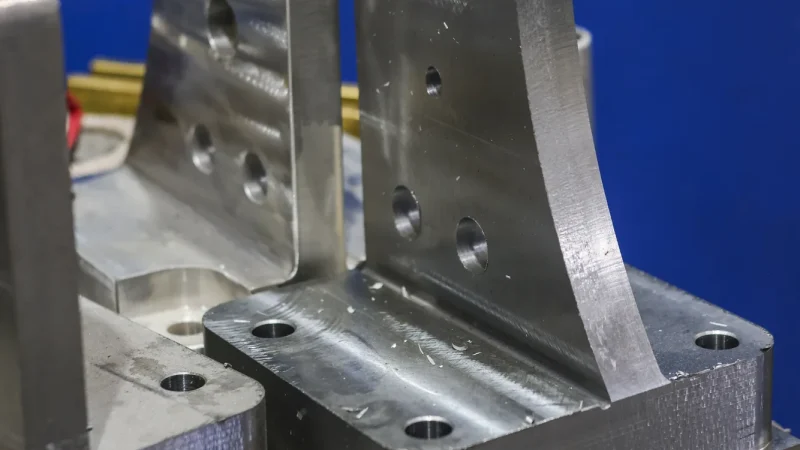
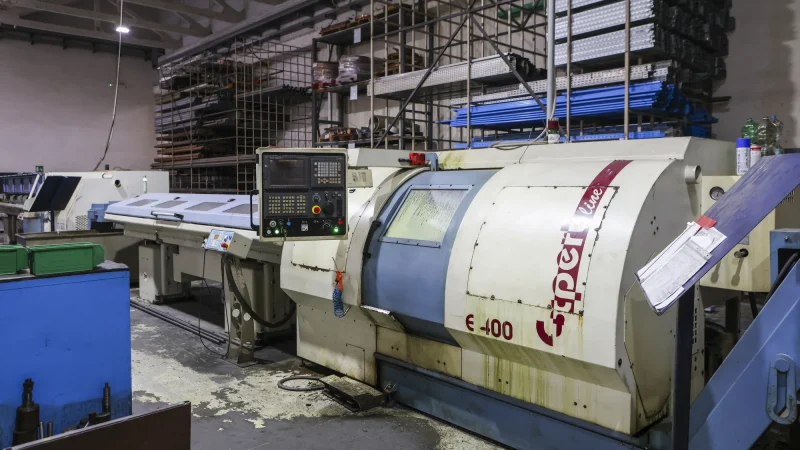
On a single part, the actual machining is often the shortest part of the day. Around it there is the toolpath programming, the set-up on the machine, the construction of a clamping fixture if the geometry does not hold on its own, and the first complete dimensional check.
All of this is paid for once. That is why the tenth part can cost a fraction of the first: the preparation has already been done.
When tooling pays off
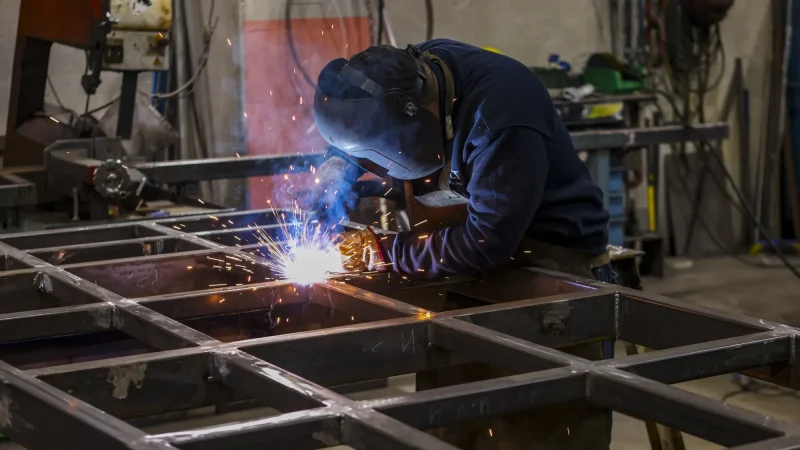
The question is not “how many parts”, but “how many times will I come back”. A welding jig or a clamping fixture costs money; it pays for itself if the part returns to production.
- One-off part or occasional spare: set-up is kept to a minimum, even at the price of slower machining.
- Batches repeated during the year: it is worth investing in the fixture on the first batch and keeping it.
- Continuous production: the cycle is optimised, and inspections become sample-based instead of 100%.
Inspections change in nature
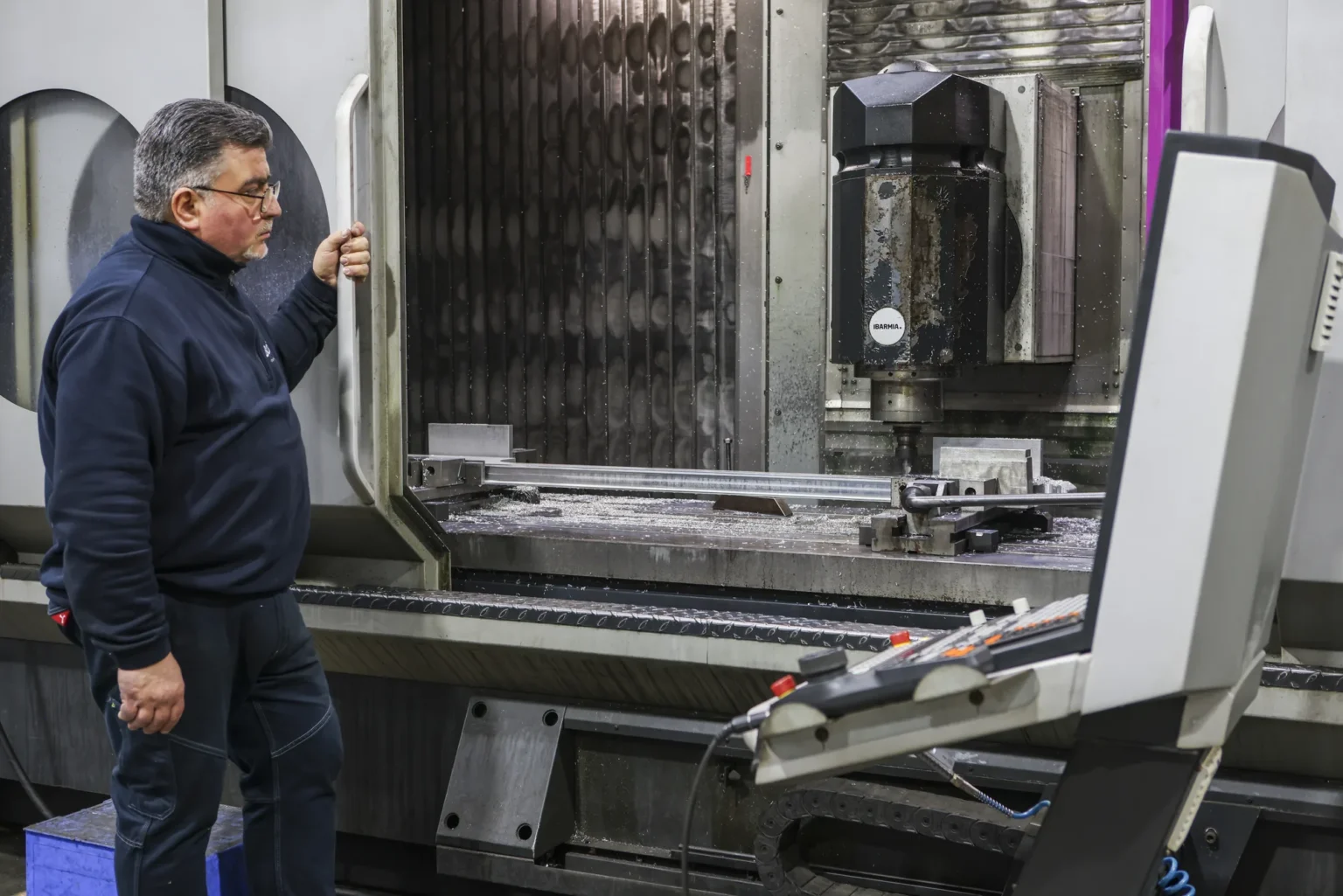
On a prototype everything is checked, because every dimension is still an open question. In production, once the process has been shown to be stable, inspection shifts: fewer measurements on each part, more attention to process parameters and sampling.
Switching from one to the other too early is the classic mistake: inspection is relaxed before the process is truly stable, and the defect reaches the customer.
The prototype that becomes a production run
If a part starts life as a prototype but could go into production, it is worth saying so straight away. Some choices made to go fast on the first part — a manual set-up, one extra operation — are fine once and unsustainable on a hundred. Knowing it in advance makes it possible to design the cycle with the next step already in mind.
What to put in your request
For a price that still holds in six months, three numbers are needed: the quantity of the first batch, the estimated yearly quantity, and how often it repeats. With these we can quote both the prototype price and the production price, and it is immediately clear where the saving lies.
We handle both, from the single part to repeat production: for an assessment, the form is on the Contact Us page.